
Electromagnetic pulse and its threat to data centers
Uptime Institute Intelligence · J. Davis
Uptime Institute Intelligence's Briefing Report 76, covering types of EMP, their effects on electronics and the grid, and recommendations for EMP risk assessment.
On this page
Overview
This document is Uptime Institute Intelligence's UII Briefing Report 76, dated August 2022 and written by J. Davis. The report summarises natural and artificial electromagnetic pulse (EMP) types, their effects on electronic equipment and the electricity grid, and offers recommendations for EMP risk assessment. The full text sits behind a registration form or an Uptime Intelligence subscription, so this page rests only on the public landing page.
The first point the landing page stresses is that most data centre operators do not include EMP in their risk assessments or protection. This shows a low-probability, high-impact threat being systematically overlooked across the industry.
The second point is that some EMP forms act most strongly on the power grid, with only secondary effects on data centres. A facility may therefore be exposed less through a direct pulse than through grid outage and prolonged loss of external power. This view also bears on fuel, generator and on-site endurance planning.
Third, government and military infrastructure use EMP protective measures, and some of them may be useful to non-government data centres. The report also recommends repeating risk assessments that include EMP periodically as risk profiles change. As a limitation, detailed technical methods and quantitative data are in the member report and are not reproduced here. Copyright belongs to Uptime Institute.
Key points
- The report is UII Briefing Report 76, published in August 2022.
- Most data centre operators do not include EMP in risk assessment or protection.
- Some EMP forms act most strongly on the power grid, with secondary effects on data centres.
- Government and military infrastructure use EMP protective measures.
- Some of those measures can be useful for non-government data centres.
- Risk assessments including EMP are best repeated periodically as risk profiles change.
- Access to the full report requires registration or a subscription.
Using it in design
- Add EMP and geomagnetic disturbance (GMD) to the risk register as an optional site hazard.
- When assessing grid-borne effects, link the prolonged external power loss scenario to fuel and generator planning.
- Fold EMP assessment into periodic risk reviews instead of treating it as a one-off exercise.
Monthly newsletter · free
Keep your reading list current
Once a month: new library sources, changes to Turkish regulations and upcoming data centre events.
SoSo CAD
Bring standards pre-checks into your project
Review model-based TS EN 50600 and Tier pre-checks, missing inputs and items requiring engineering review in SoSo CAD.
Request a demo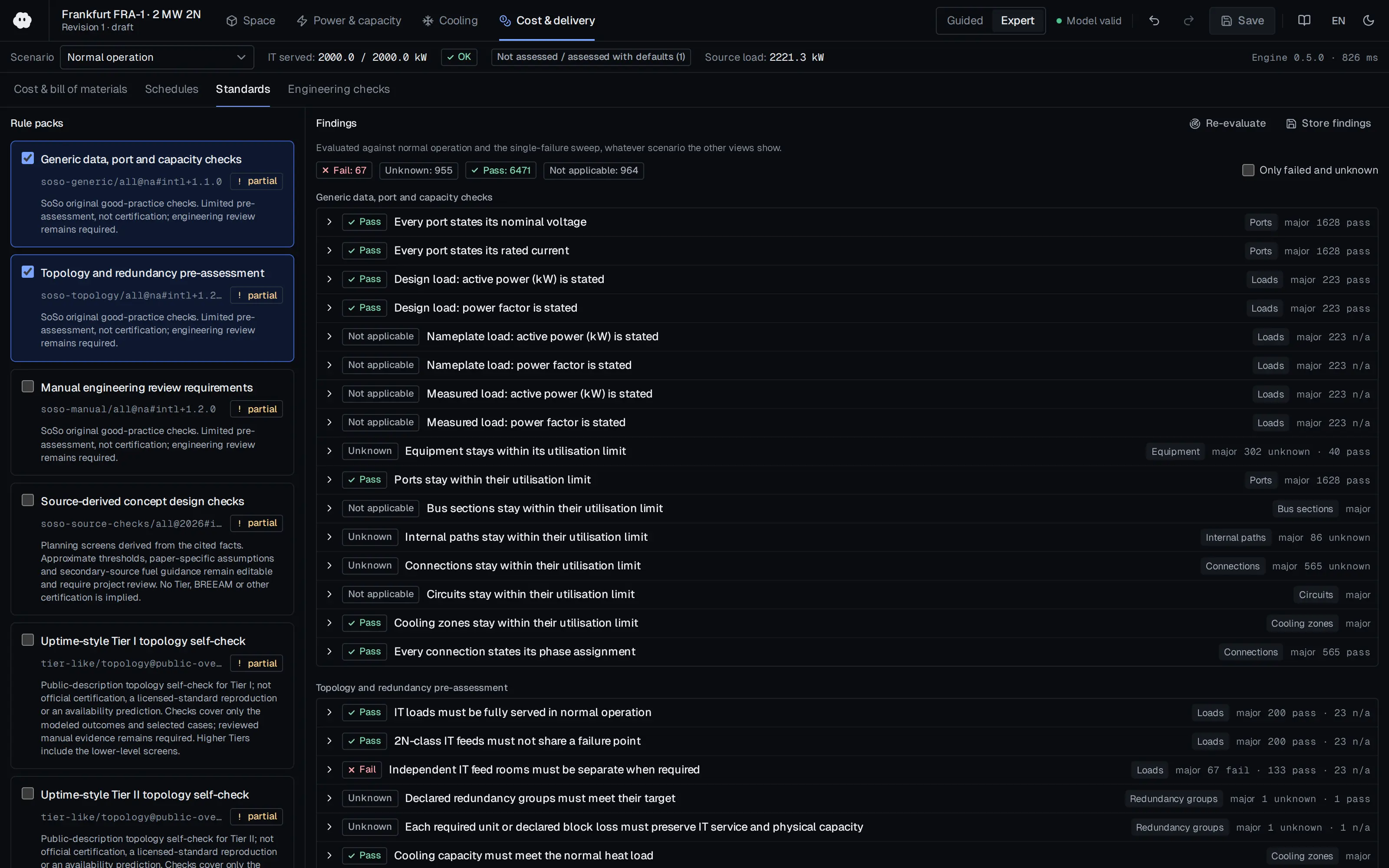
Who should read it
Data centre risk managers, site-selection planners and engineers responsible for critical infrastructure resilience.
Publication details
- Authors
- J. Davis
- Publisher
- Uptime Institute Intelligence
- Year
- 2022
- Document number
- UII Briefing Report 76
- Document language
- English
- Source type
- Industry body
- Access
- Citation only
- Licence
- Copyright retained; citation only — the publisher’s terms apply to the original document
Original licence note
Report behind a registration form (or Uptime Intelligence subscription); copyright Uptime Institute. Facts taken only from the public landing page / press release. Citation only.
Citation
J. Davis (2022). Electromagnetic pulse and its threat to data centers. Uptime Institute Intelligence. UII Briefing Report 76. https://uptimeinstitute.com/resources/research-and-reports/electromagnetic-pulse-and-its-threat-to-data-centers
Events on this subject
Browse the events calendarAll content and rights belong to the respective authors and publishers. SoSo CAD provides only the citation, its own summary and a link to the source, and is not responsible for the sources' content.