
Annual Outage Analysis 2020: causes and impacts of publicly recorded IT service and data center outages 2016-2019
Uptime Institute
Uptime Institute's 2020 analysis, built on its database of publicly reported outages, shows primary outage causes shifting from physical infrastructure to software and IT systems. It is a useful reminder that redundant infrastructure alone does not settle reliability risk.
On this page
Overview
This study draws on the Uptime Institute database of publicly recorded IT service and data center outages from 2016 through 2019. Its scope is to establish why outages happen and what impact follows. The publisher presents it as part of a recurring series tracking the industry's outage experience, and the 2020 edition covers a four-year observation window. This record is based only on the public landing page, not on the full report.
The first finding highlighted on the landing page is that outage frequency in the studied period was higher than ever. The second, more important for designers, is a shift in primary causes: outages increasingly originate in software and IT systems rather than in physical data center infrastructure. This means investment in power and cooling redundancy addresses only part of the overall outage risk.
The public Uptime Intelligence resource page adds that the analysis also examines which industries suffer most from outages and why. That framing treats an outage not only as a technical failure but as a business impact that varies by sector.
As context, the report helps design teams move the reliability discussion beyond Tier topology and redundancy counts. Physical redundancy remains necessary, but the outage risk narrative should also include IT and software causes. For decision makers the message is that resilience has to be addressed across infrastructure, operations and software layers together.
Key points
- Scope: publicly recorded outages from 2016-2019.
- Outage frequency is higher than ever in the studied data.
- Primary causes are shifting from physical data center infrastructure to software and IT systems.
- The analysis covers which industries suffer most from outages and why.
- The business impact of outages is among the topics examined.
- The full report needs registration or an Uptime Intelligence subscription; this summary rests on the public page only.
Using it in design
- In reliability explainers, state that physical redundancy covers only part of outage risk.
- Add software and IT-system causes as a separate item in the risk narrative.
- Weigh redundancy spending together with operational processes and IT resilience measures.
- Use sector-specific outage impact as an input when discussing a client's tolerable downtime.
Monthly newsletter · free
Keep your reading list current
Once a month: new library sources, changes to Turkish regulations and upcoming data centre events.
SoSo CAD
Assess redundancy through scenarios
Compare normal operation and equipment failures in SoSo CAD, with supplied loads and capacity shortfalls in one view.
Request a demo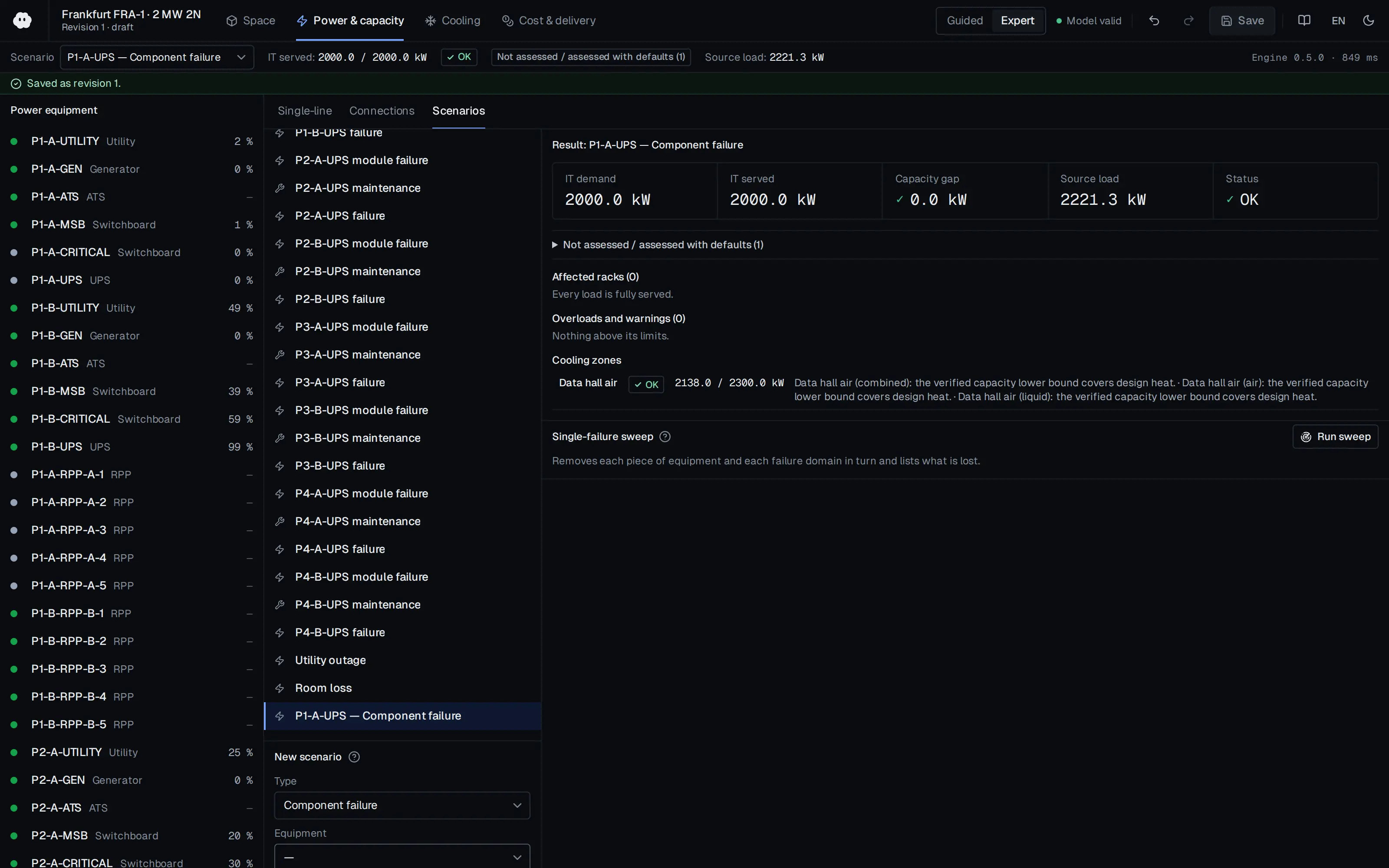
Who should read it
Designers, operations managers and decision makers who assess data center reliability and risk.
Publication details
- Authors
- Uptime Institute
- Publisher
- Uptime Institute
- Year
- 2020
- Document language
- English
- Source type
- Industry body
- Access
- Citation only
- Licence
- Copyright retained; citation only — the publisher’s terms apply to the original document
Original licence note
Report behind a registration form (or Uptime Intelligence subscription); copyright Uptime Institute. Facts taken only from the public landing page / press release. Citation only.
Citation
Uptime Institute (2020). Annual Outage Analysis 2020: causes and impacts of publicly recorded IT service and data center outages 2016-2019. Uptime Institute. https://uptimeinstitute.com/resources/research-and-reports/annual-outage-analysis-2020
Events on this subject
Browse the events calendarAll content and rights belong to the respective authors and publishers. SoSo CAD provides only the citation, its own summary and a link to the source, and is not responsible for the sources' content.