
Regulation on Network and Information Security in the Electronic Communications Sector
Original title Elektronik Haberleşme Sektöründe Şebeke ve Bilgi Güvenliği Yönetmeliği
Bilgi Teknolojileri ve İletişim Kurumu (BTK)
The BTK regulation setting network and information security obligations for authorised electronic-communications operators, including physical protection, backup and disaster recovery centre requirements.
On this page
Overview
Issued by the Information and Communication Technologies Authority (BTK) and published in the Official Gazette of 13.07.2014 (No. 29059), this regulation sets network and information security obligations for authorised electronic-communications operators. The obliged parties include telecom operators and infrastructure operators. It is directly relevant to telecom-operator and carrier-neutral data centre clients.
The regulation requires operators to establish an information security management system (ISMS) covering all authorised services and critical systems (Article 6(1)). Access to areas with critical systems is limited to authorised persons, and entry and exit records are kept for at least two years (Article 17(2)). Measures are required against fire, flood, earthquake, lightning, explosion and other environmental threats, and incoming communication and power lines must be brought in underground or otherwise protected (Article 18).
Equipment must be protected against the loss of support systems such as electricity, water, HVAC and ventilation (Article 19(1)). Incidents affecting more than 5% of subscribers must be reported to the Authority as soon as possible (Article 38(1)). Obliged operators must set up, or buy services from, a disaster recovery centre far enough away not to be affected by the same disaster, within two years of becoming obliged (Article 39(1)-(2)). The regulation contains other obligations, such as inventory and backups, whose details this record does not go into. Related documents include Law No. 7545 on Cyber Security, ISO/IEC 27001, ISO/IEC 22237-6 and NFPA 76.
Key points
- Operators must establish an ISMS covering all authorised services and critical systems (Article 6(1)).
- Access to areas with critical systems is limited to authorised persons; entry and exit records are kept for at least 2 years (Article 17(2)).
- Measures are required against fire, flood, earthquake, lightning, explosion and other environmental threats; incoming communication and power lines underground or otherwise protected (Article 18).
- Equipment is protected against loss of support systems such as electricity, water, HVAC and ventilation (Article 19(1)).
- Incidents affecting more than 5% of subscribers must be reported to the Authority as soon as possible (Article 38(1)).
- Obliged operators set up, or buy, a disaster recovery centre far enough not to be affected by the same disaster, within two years of becoming obliged (Article 39(1)-(2)).
- Related documents: Law No. 7545 on Cyber Security, ISO/IEC 27001, ISO/IEC 22237-6, NFPA 76.
Using it in design
- In the telecom client profile, enforce 2-year access-log retention, underground or protected utility entries and support-system redundancy checks.
- In multi-site planning, add a DR-site distance and hazard-independence check (different seismic and flood exposure).
- Size the physical access control system to retain records for at least 2 years.
- Include loss scenarios for electricity, water, HVAC and ventilation support systems in the redundancy check.
Monthly newsletter · free
Keep your reading list current
Once a month: new library sources, changes to Turkish regulations and upcoming data centre events.
SoSo CAD
Bring standards pre-checks into your project
Review model-based TS EN 50600 and Tier pre-checks, missing inputs and items requiring engineering review in SoSo CAD.
Request a demo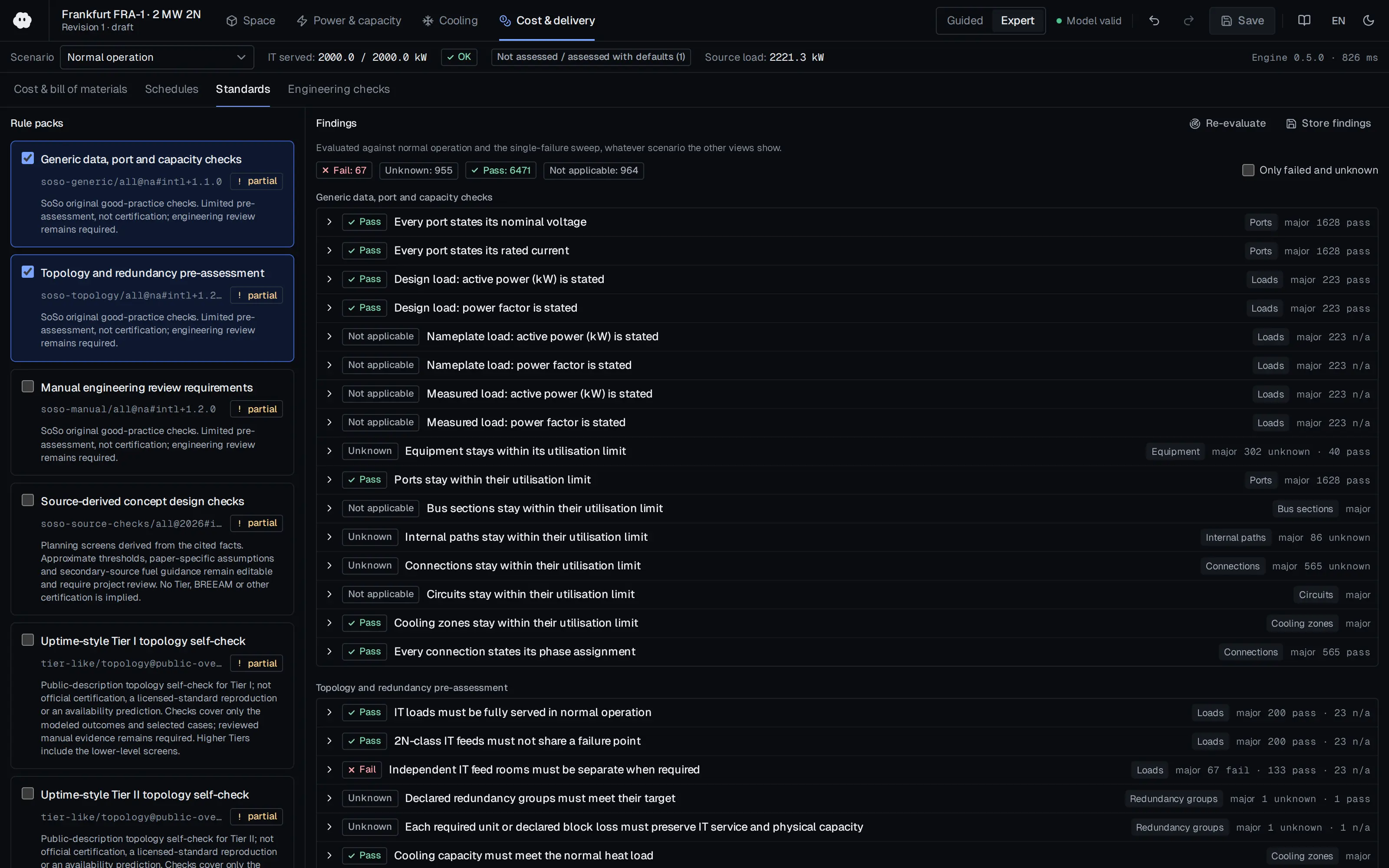
Who should read it
Engineers and managers doing design, security and compliance work for telecom operators and carrier-neutral data centres.
Related standards
- 7545 sayılı Siber Güvenlik Kanunu
- ISO/IEC 27001
- ISO/IEC 22237-6
- NFPA 76
Publication details
- Authors
- Bilgi Teknolojileri ve İletişim Kurumu (BTK)
- Publisher
- Bilgi Teknolojileri ve İletişim Kurumu (BTK)
- Year
- 2014
- Document number
- RG 29059 (13.07.2014)
- Document language
- Turkish
- Source type
- Expert / community
- Access
- Free to read
- Licence
- Bibliographic reference only — the document is not redistributed here; confirm reuse terms at the original source
Original licence note
Official Turkish legislation published in the Resmî Gazete; FSEK (Law 5846) Art. 31 makes laws and regulations freely reproducible, but this library keeps it citation-only by policy. Text read from mevzuat.gov.tr (consolidated version as of 2026-11).
Citation
Bilgi Teknolojileri ve İletişim Kurumu (BTK) (2014). Elektronik Haberleşme Sektöründe Şebeke ve Bilgi Güvenliği Yönetmeliği. Bilgi Teknolojileri ve İletişim Kurumu (BTK). RG 29059 (13.07.2014). https://www.mevzuat.gov.tr/mevzuat?MevzuatNo=19880&MevzuatTur=7&MevzuatTertip=5
Events on this subject
- Data Center Eurasia (DCE) 2027
- Datacenter Forum Stockholm
- ICCI 2027 – Uluslararası Enerji ve Çevre Fuarı ve Konferansı
All content and rights belong to the respective authors and publishers. SoSo CAD provides only the citation, its own summary and a link to the source, and is not responsible for the sources' content.
Related sources
All sources on this topicISO/IEC 2021
Information technology - Data centre facilities and infrastructures - Part 1: General concepts
At project setup, offer ISO/IEC 22237 alongside EN 50600 as a selectable standard profile.
- Related standards: EN 50600-1, ISO/IEC 22237-3, ISO/IEC 22237-4 and TIA-942.
Open Compute Project Foundation 2026
Data Center Facility - Low Voltage Direct Current Power Distribution, Version 1.1.0
Choose the voltage class with LV limited to 1500 VDC; check that sources stay below it in steady state (for example 750 V per pole) and that device voltage windows fit; 800 V devices with only a +/-5% range cannot operate below 750 V and are unusable there.
- Moving backup energy storage out of the rack frees 12-16 OU, 27-36% more space in a 44 OU rack.
National Institute of Standards and Technology 2024
The NIST Cybersecurity Framework (CSF) 2.0
Create separate Organizational Profiles for a facility's IT, OT and building management systems (for example electrical and cooling SCADA/BMS) and state each Profile's scope.
- The Core has 22 Categories with Subcategories; the outcomes are not a checklist.
National Institute of Standards and Technology 2023
NIST SP 800-82 Rev. 3: Guide to Operational Technology (OT) Security
Zone the data centre's electrical (UPS, generator, ATS) and mechanical (cooling, HVAC) control systems as an OT network, separated from the corporate IT network by a DMZ.
- Network architecture should characterise, segment and isolate IT and OT devices, using the Purdue model, ISA-95 or an IIoT model, with a DMZ.
National Institute of Standards and Technology 2020
NIST SP 800-53 Rev. 5: Security and Privacy Controls for Information Systems and Organizations
In data-centre power design, set PE-9 requirements for physically separated redundant cabling paths and automatic voltage control on critical components, and define the separation distance as an organisational parameter.
- Baselines and tailoring guidance moved to SP 800-53B.
Beca 2026
Part 1: Designing next-generation data centres - Principals for efficiency and resilience
Allow mixed-density zones within one hall, each with its own density assumptions.
- Seismic design to AS/NZS 1170 is part of resilience in the region.