Technical guideCitation
The Green Grid 2009
North American Water-Side Economizer Map (2009)
Use the map only as a visual cross-check.
- Related standard: ASHRAE 90.4.

Topic guide
Review publications on site selection, building layouts and the physical arrangement of data centre infrastructure. Explore capacity, environmental conditions, access and expansion in the context of your project.
73–96 / 147
The Green Grid 2009
Use the map only as a visual cross-check.
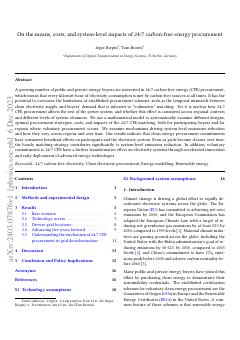
Energy Strategy Reviews (Elsevier BV) 2024
In a data-centre renewable procurement strategy, weigh that annual volumetric matching does not deliver hourly clean supply (54% to 83%) and that 85-95% hourly CFE targets cut emissions more at a relatively small premium.
Open Compute Project Foundation 2015
Add an ORV2 rack catalogue entry (600 x 1067 x ~2210 mm, 48 mm OpenU, 500/1400 kg IT-load ratings) so floor-loading calculators can use the correct footprint and point loads.
Consulting-Specifying Engineer 2008
In the tool's economizer studies, report hours below the humidity floor alongside energy savings, per climate.
Schneider Electric 2011
Assign each room a security zone level and verify every path into the white space crosses zones in increasing order, with no direct door from a low zone to a much higher one.
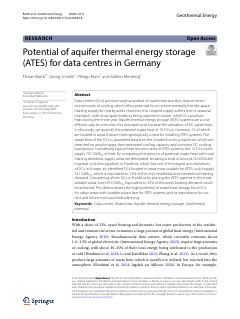
Geothermal Energy (Springer Science and Business Media LLC) 2026
Before linking data-centre waste heat to nearby building heating, check that site subsurface geology suits ATES and that the site is outside water-protection zones; only 13 of 19 sites did.
Hitachi Energy 2025
Support phased supply scenarios (off-grid hub then grid) with PV, BESS and generator sizing in the site/energy module.
EPRI (Electric Power Research Institute) 2024
When a user picks a US state, show regional data-centre load share and growth scenarios as context for utility interconnection lead times.
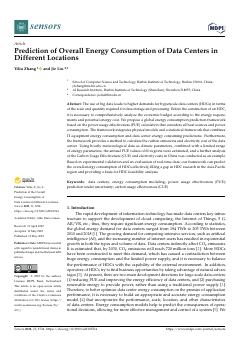
Sensors (MDPI AG) 2022
In siting, do not use PUE as the only criterion; evaluate it together with electricity cost (tariff) and carbon (CUE, grid mix) estimates derived from PUE, since a low-PUE site may have a high tariff or carbon-intensive grid.
Vertiv 2019
Add a delivery-method attribute per block (stick-built, skid, power module, prefab room/facility) with factory-test status and shipping-split count.
Data Center Knowledge 2018
Model the campus as power blocks with block-level MEP independence and fire zones.
Schneider Electric 2014
Give each data hall a floor-system parameter: raised air plenum, raised piping only, or hard floor.
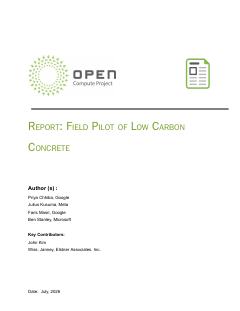
Open Compute Project Foundation 2026
Write the slab embodied-carbon target into the specification together with an EPD requirement and tie it to national or regional benchmarks as a percentage; a 30% reduction against the control is a low-risk starting point.
arXiv (UC Riverside / RIT / Caltech preprint) 2026
Add a peak-day water demand output (annual average times peaking factor, default at least 2.2 for cooling towers, configurable up to about 6-10 for evaporative assist used only on hot days), and compare it with utility supply capacity in site screening.
Nortek Air Solutions 2021
In a site/sustainability module, estimate annual water (m3), WUE and cooling energy for alternative plant types at a chosen SAT, using local water and power tariffs.
Schneider Electric 2017
Build the data model on the facility > room > pod > cabinet > device hierarchy and give each subsystem a deployment level and a linkage rule (for example 1 CRAH per N racks).
Nortek Air Solutions 2020
For sites in hurricane or tornado regions, require a wind-pressure rating (psf at design pressure) for outdoor mechanical equipment and derive the required psf from wind speed, risk category and mounting height.
Lawrence Berkeley National Laboratory 2026
Add interconnection strategy options (staged or phased energisation, flexible or curtailable service, BYOG) to the campus power plan.
ASHRAE 2008
Add floor-loading and seismic anchorage checks for racks to the design checklist, especially for AI racks of 1 t or more.
European Commission, DG CNECT (EY, Borderstep Institute, AIT, RP legalitax) 2025
When choosing cooling architecture assess waste heat temperature early: liquid cooling gives higher temperatures, even air cooling can give about 30-35 C as a heat-pump source; position the heat pump for the receiving network temperature (60-80 C or 4th/5th generation).
Türkiye Elektrik Dağıtım A.Ş. (TEDAŞ) 2020
When placing a prefabricated substation, apply the IP 68 cable-entry and internal-arc layout rules (rear clearance of 100 mm or less, or closed).
Türkiye Elektrik Dağıtım A.Ş. (TEDAŞ) 2006
In site layout, offer a compact kiosk substation block (footprint, IP 23D, ventilation) as an option for edge and small sites.
Data Center Frontier (Black & Veatch contributed article) 2024
Offer a substation object with a configuration field (radial, main-tie-main, ring bus, breaker-and-a-half, double-bus double-breaker) and an insulation type field (AIS, GIS), with footprint and cost multipliers.
Environmental Research Letters (IOP Publishing) 2021
In data-centre siting, assess the water scarcity footprint (m³ US-eq/MWh) and carbon intensity together with volumetric water intensity; they vary from 0.5 to 305 m³ US-eq/MWh by location.
All content and rights belong to the respective authors and publishers. SoSo CAD provides only the citation, its own summary and a link to the source, and is not responsible for the sources' content.
Monthly newsletter · free
Once a month: new library sources, changes to Turkish regulations and upcoming data centre events.