Topic guide

Sustainability

Browse publications on environmental impacts, carbon, resource use and life cycles. Compare assessment methods while reviewing their scope, data periods and reporting boundaries alongside the original sources.

Sources
201
Downloadable PDFs
66
Years
2007–2026

All sources

49–72 / 201

Research paperPDF

Buildings (MDPI AG) 2025

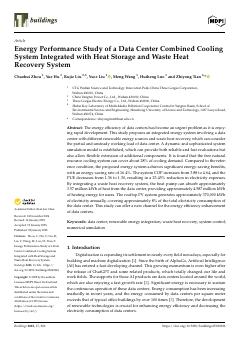
Energy Performance Study of a Data Center Combined Cooling System Integrated with Heat Storage and Waste Heat Recovery System

Assess heat recovery from chilled-water return with a water-source heat pump and hot-water storage in annual-hour simulation; match the winter and summer outlet temperature difference (45 and 30 °C) to the user's need.

  • Free natural-resource cooling covers about 28% of the cooling demand.

White paperFree to read

Schneider Electric 2022

Environmental Sustainability Management (ESM) Software for Colocation Data Centers

In the metering plan generator, confirm meters exist to produce the chosen maturity tier's metric set: total facility kWh, IT kWh for PUE, renewable kWh, site water m3 for WUE, reused energy for ERF.

  • Over 40 countries require GHG reporting; a provider's Scope 1 and 2 emissions are a significant source of tenants' Scope 3.
White paperFree to read

Schneider Electric 2018

FAQs for Using Lithium-ion Batteries with a UPS

Battery catalog: chemistry (VRLA, LFP, NMC, LMO, NCA, LTO, LCO), specific energy, design and cycle life, rated temperature, footprint and weight per kWh, recharge time and compatible UPS models.

  • Li-ion takes 50-80% less floor space and weighs 60-80% less.
Research paperPDF

Energy Advances (Royal Society of Chemistry (RSC)) 2025

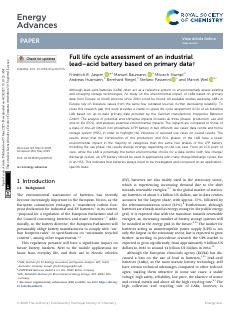
Full life cycle assessment of an industrial lead–acid battery based on primary data

For UPS duty with a few cycles a year and minutes of autonomy, compare battery chemistries by environmental impact categories (GWP, ecotoxicity, resource depletion) as well as energy density, because production and EOL dominate.

  • Data centres account for about 37% of the roughly 3.4 billion USD global stationary-battery market, followed by telecom at 25%.
White paperFree to read

Schneider Electric 2025

Guide to Assess a Commercial Product’s Sustainability

Add EPD/PEP fields to each catalogue product: programme operator, PCR/PSR version, validity date, functional unit, reference product weight and rating, per-stage kg CO2e, emission factor used and exclusions such as batteries.

  • Standards allow a +/-5% margin of error on reported values, so indicators within 10% of each other should be treated as equal.

All content and rights belong to the respective authors and publishers. SoSo CAD provides only the citation, its own summary and a link to the source, and is not responsible for the sources' content.

Monthly newsletter · free

Keep your reading list current

Once a month: new library sources, changes to Turkish regulations and upcoming data centre events.