In the cooling-plant builder keep a component list per subsystem (chiller, CDU, pump skid, heat recovery) with fields for maximum chilled-water temperature, HX approach temperature and VFD THDi.
Advanced Active Filter with SiC switches quoted at 98.2% efficiency.
Allow UPS placement in the white space with an airflow-pattern attribute (front-to-back, front-to-top) and count its heat release in the hall cooling load.
A 480 V UPS input/output needs no neutral (three wires) and thinner cables than 208 V; a PDU next to the UPS steps down to 208/120 V.
Give UPS records an architecture enum {conventional, modular, scalable_modular}, module rating, maximum parallel units, MTTR hours and a hot-swap flag; store efficiency at 25/50/75/100% load, not one number.
Load-variation examples change efficiency by only about 0.5%.
Use it as a template for a '2N LV, 0.5 MW' starter project, auto-generating the RPDU, RPP, secondary board, UPS, main board and transformer/generator chain from rack count and kW/rack.
Transformer: dry type, 10/0.4 kV, 1250 kVA, Z = 6%.
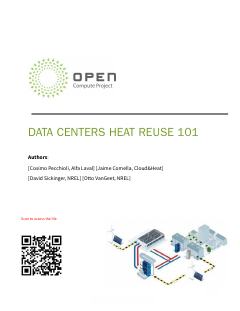
A heat-reuse module should report recoverable heat (kW) and its temperature band by cooling technology (air, RDHx, DLC/immersion) and suggest compatible heat-host categories.
Containerised/modular data centres can exceed 0.5 MW, a significant heat quantity for many local applications.
Support generator-less or reduced-generator options in the design wizard (fuel cell, long-duration BESS) with explicit autonomy-hours calculation and load-shed tiers.
Li-ion battery cost per kWh fell about 85% from 2010 to 2018 (BloombergNEF).
In the single-line editor, tag transfer devices as ATSE (IEC 60947-6-1) or STS with a transfer-time field, and suggest STS where the load needs under about 10 ms.
Human error accounts for 22 % of unplanned outages.
In cooling selection, add the roughly 25.5 million litres per year per MW of evaporative cooling water need and the potable share (57-65%) to the siting and water supply decision.
Raising chilled-water temperature from the usual 7-10 °C to 18-20 °C can cut expenses by 40%.
In waste-heat sales, set outlet temperature by cooling technology (air 25-35 °C, liquid up to 60 °C, two-phase up to 90 °C) and check heat-pump requirement against the district-heating generation (45-55 °C for 4G).
Fourth-generation district heating can run with supply temperatures of 45 to 55 °C.
In data-centre generator load-transfer and retransfer sequencing, size load steps against generator voltage and frequency limits, and split steps whose prediction band crosses a limit into smaller steps.
Even at steady load, the low-inertia, governor-controlled generator showed low-frequency oscillations of about 3 V and 0.5 Hz.
All content and rights belong to the respective authors and publishers. SoSo CAD provides only the citation, its own summary and a link to the source, and is not responsible for the sources' content.